Bathrooms are more than just functional spaces—they’re a sanctuary for relaxation and self-care. In recent years, the transitional style has become a popular design choice for bathrooms, as it seamlessly blends the timeless elegance of traditional design with the clean lines and simplicity of modern aesthetics. When done correctly, transitional bathrooms exude warmth, comfort, and sophistication. Incorporating warm elements into a transitional bathroom can elevate the space, making it feel inviting and cozy without sacrificing style. Here are 10 warm transitional bathroom ideas that combine elegance, functionality, and a welcoming atmosphere.
1. Warm Wood Accents
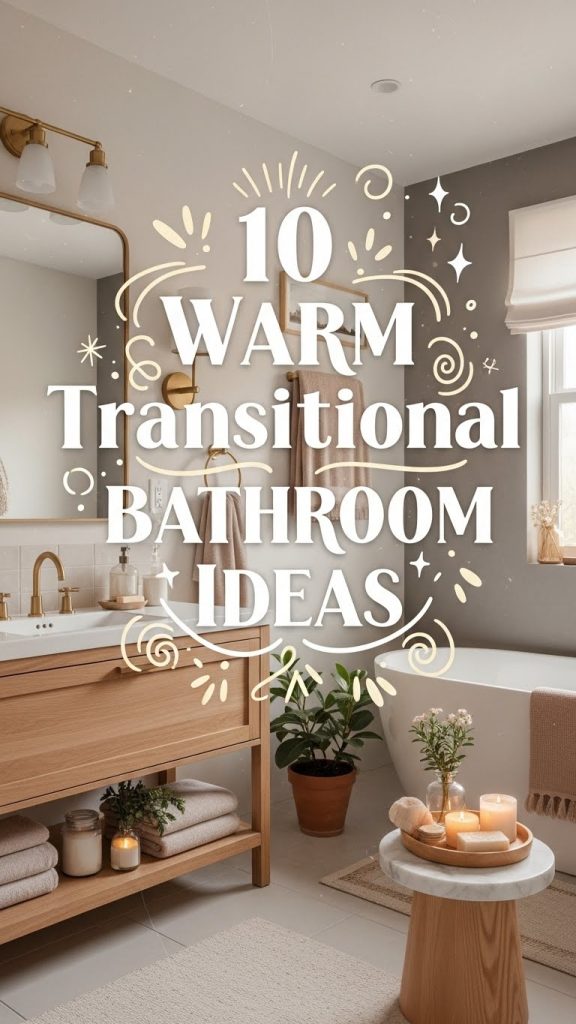
Wood is one of the easiest ways to add warmth to a transitional bathroom. From rich walnut vanities to oak shelving, incorporating natural wood textures softens the clean lines of modern fixtures while complementing traditional elements. Consider floating wooden vanities for a modern twist or a classic wooden cabinet with sleek hardware for a balanced transitional look. Wooden frames for mirrors and towel racks also add subtle warmth without overwhelming the space.
2. Soft Neutral Color Palette
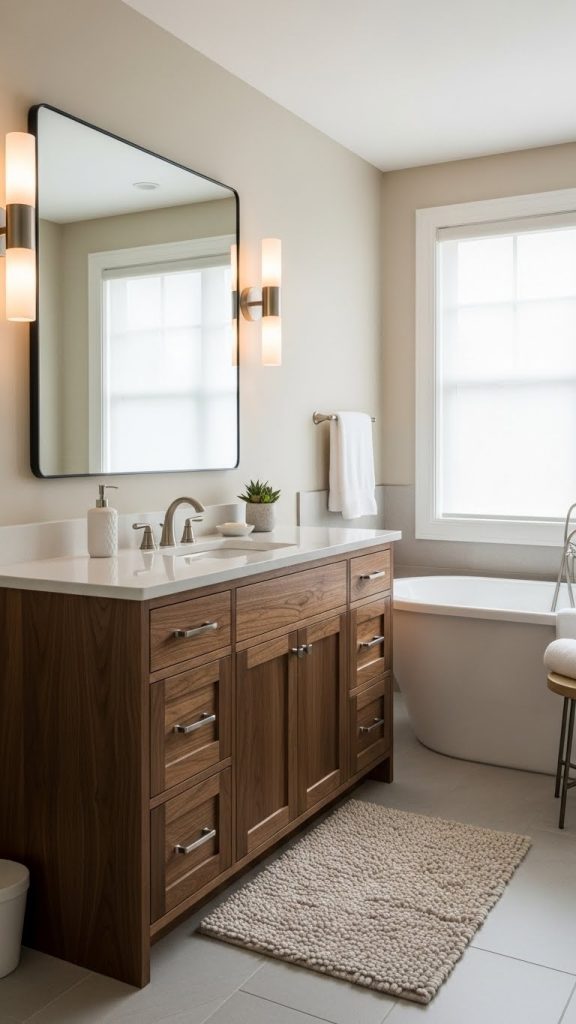
Transitional bathrooms often rely on a neutral palette, but adding warm undertones like soft taupe, creamy beige, or muted terracotta can create a cozy and inviting environment. These colors work beautifully with both modern and traditional finishes, allowing you to mix and match fixtures, tiles, and accessories. Warm neutrals also help in making small bathrooms appear larger and more welcoming.

3. Layered Lighting
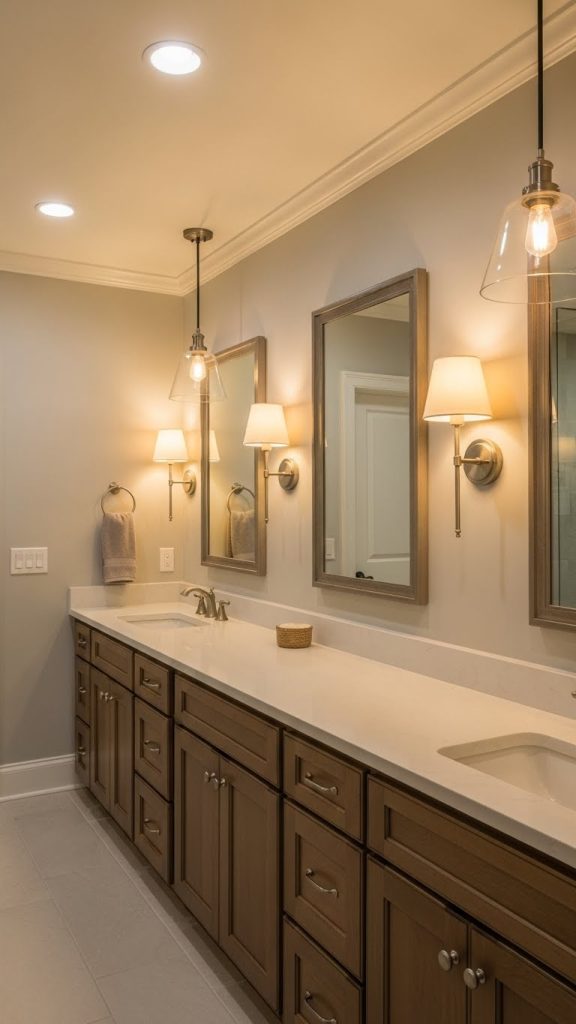
Lighting plays a critical role in setting the mood of any bathroom. A combination of ambient, task, and accent lighting ensures both functionality and style. Consider warm-toned LED lights or dimmable fixtures above the vanity to create a soft, inviting glow. Adding wall sconces with metallic finishes like brushed gold or bronze enhances the transitional feel while providing practical lighting. Even pendant lights or small chandeliers can make a big impact in larger bathrooms.
4. Textured Tiles
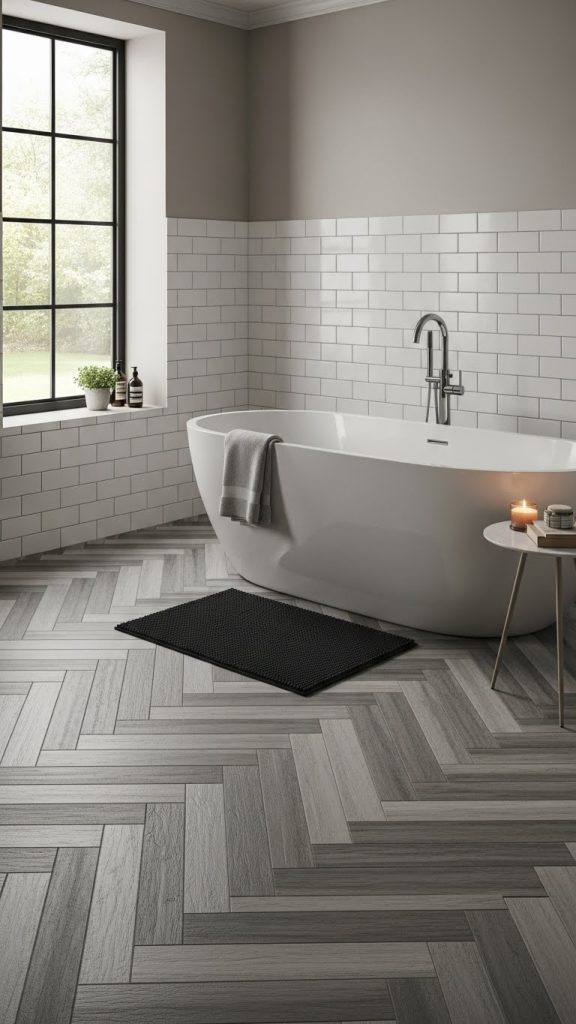
Textured tiles add depth and warmth to transitional bathrooms. Whether it’s a herringbone pattern on the floor, subway tiles with a matte finish, or natural stone tiles on the walls, the texture introduces visual interest without overpowering the space. Mixing smooth and textured surfaces allows the traditional elements like a freestanding tub or classic vanity to stand out while keeping the overall design contemporary.
5. Freestanding Bathtubs
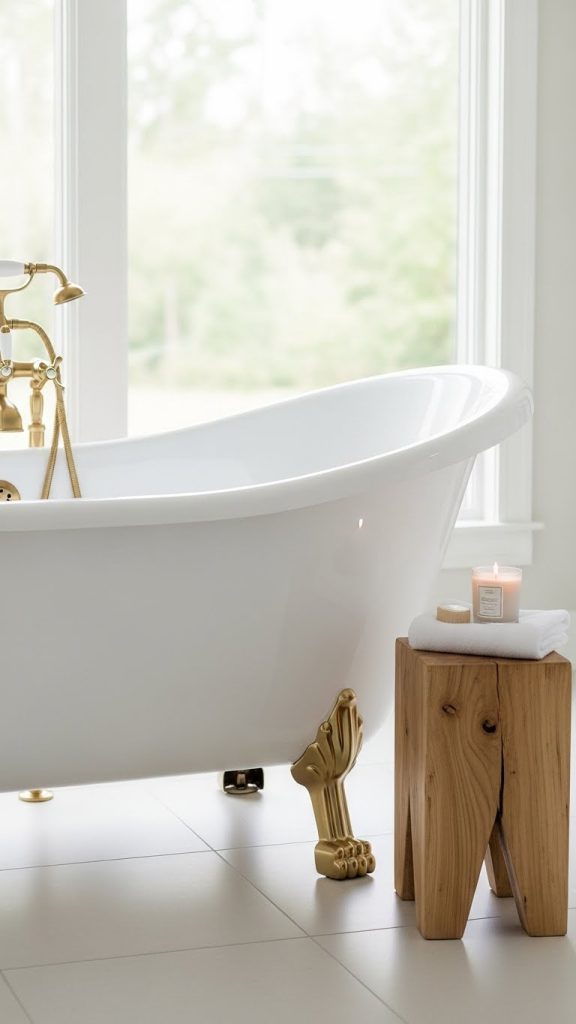
Nothing says comfort and elegance like a freestanding bathtub. In a transitional bathroom, a gently curved tub or a classic slipper-style bathtub adds a warm, inviting touch. Pair it with matte black or brushed gold fixtures for a modern edge, and place it near a window or under soft lighting to create a spa-like atmosphere. Adding a small wooden stool or a soft rug beside the tub enhances the warmth and usability of the space.
6. Warm Metal Finishes
Hardware and fixtures can dramatically influence the warmth of a bathroom. Brushed bronze, antique brass, and satin gold finishes offer a warm contrast to cooler tile or countertop tones. Use these finishes for faucets, showerheads, cabinet pulls, and mirror frames. They pair beautifully with both wood and neutral palettes, bridging the gap between traditional and contemporary styles effortlessly.

7. Textiles and Accessories
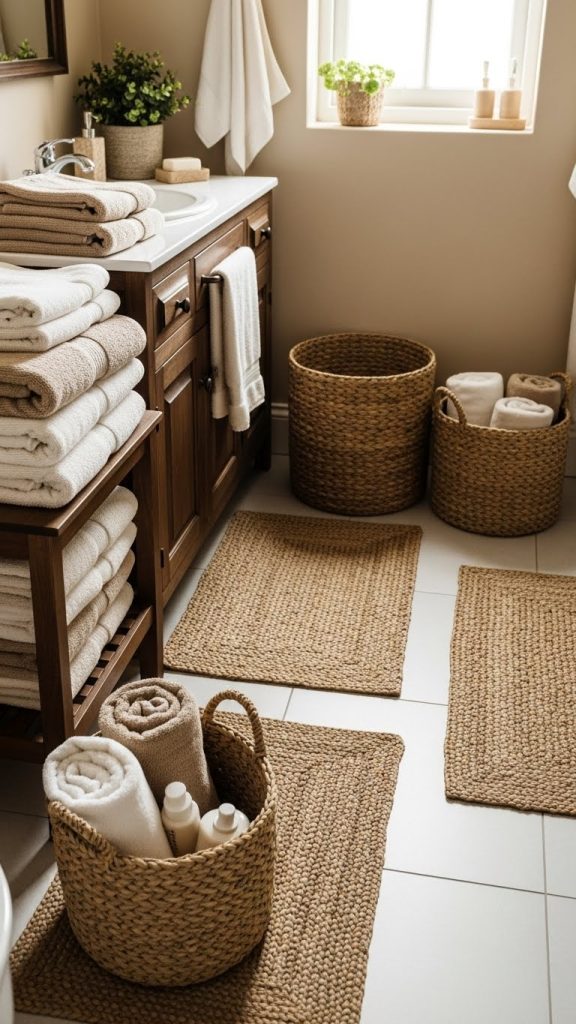
Textiles are a simple yet effective way to add warmth and personality to a transitional bathroom. Plush towels, textured bath mats, and woven baskets not only provide comfort but also soften the space visually. Incorporating natural fibers like cotton, linen, or jute adds a tactile element that complements wooden accents and warm-toned finishes. Adding accessories such as candles, vases, or framed artwork can further enhance the cozy atmosphere.
8. Integrated Storage Solutions
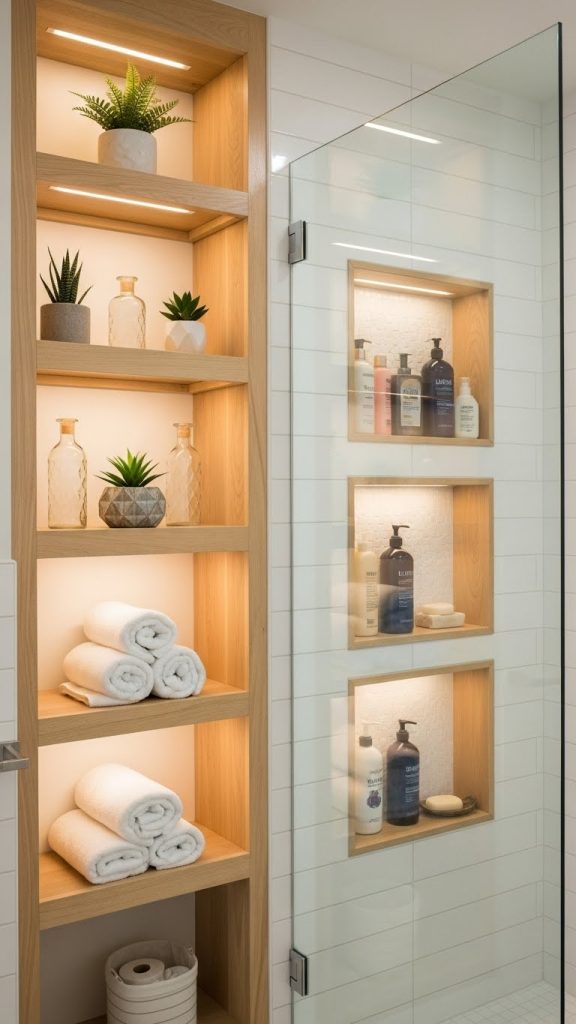
A cluttered bathroom can feel cold and uninviting. Transitional bathrooms benefit from smart storage solutions that are both functional and aesthetically pleasing. Consider built-in shelving with soft wood tones, recessed niches in the shower area, or cabinets with clean lines but classic hardware. Properly organized storage keeps everyday items out of sight, maintaining a warm, tranquil ambiance.
9. Statement Mirrors
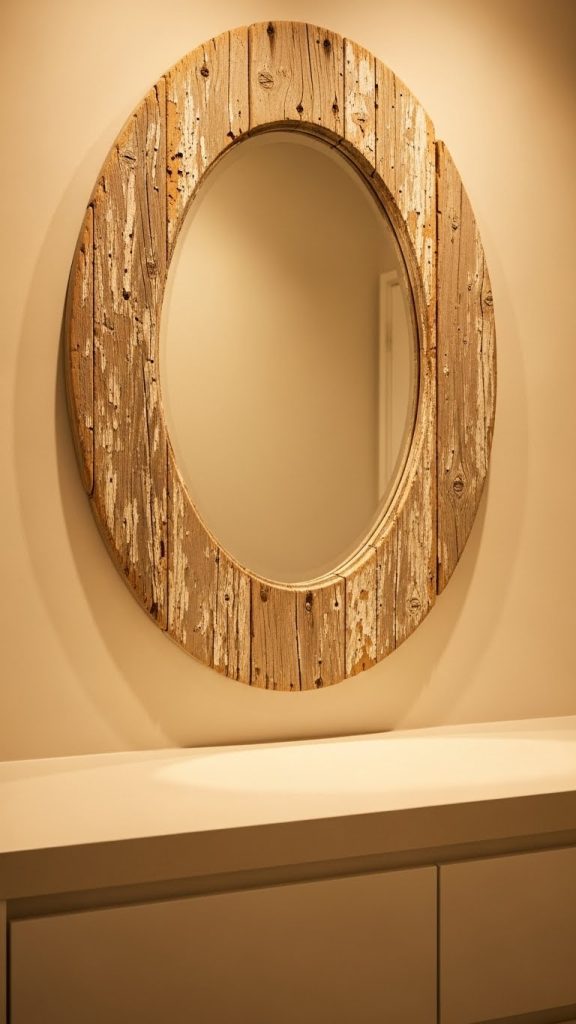
Mirrors do more than reflect light; they set the tone for the room. In a transitional bathroom, opt for a statement mirror with a wooden or metallic frame that complements your warm color palette. Oval or rounded mirrors soften sharp lines and add elegance, while large rectangular mirrors can expand the space visually. Mirrors with subtle distressed finishes or ornate detailing bridge the traditional and modern elements perfectly.
10. Natural Greenery
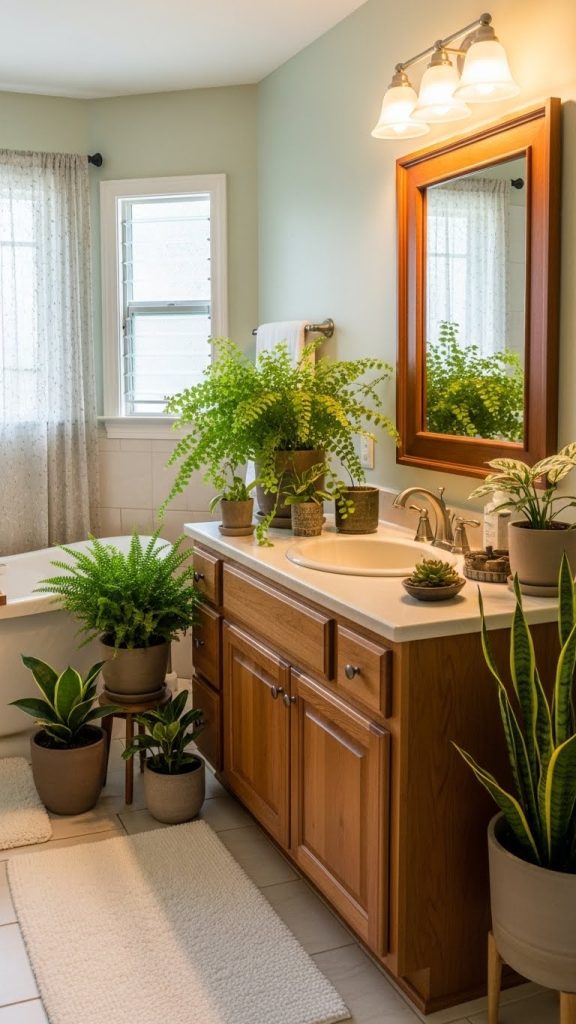
Adding a touch of nature is an effortless way to bring warmth to a transitional bathroom. Potted plants, hanging greenery, or small succulents can invigorate the space while improving air quality. Plants like ferns, peace lilies, or aloe vera thrive in humid environments and pair beautifully with neutral palettes and wooden finishes. Even a single leafy plant near the vanity or bathtub can make the bathroom feel more serene and inviting.
Conclusion
Creating a warm transitional bathroom is all about balance. By combining traditional elegance with modern simplicity, and incorporating warm materials, colors, and textures, you can transform an ordinary bathroom into a cozy, stylish retreat. Whether it’s through wooden accents, soft lighting, textured tiles, or plush textiles, these 10 ideas offer practical inspiration to make your bathroom a welcoming haven. A transitional bathroom with warmth is more than a design choice—it’s an investment in comfort and daily luxury.


