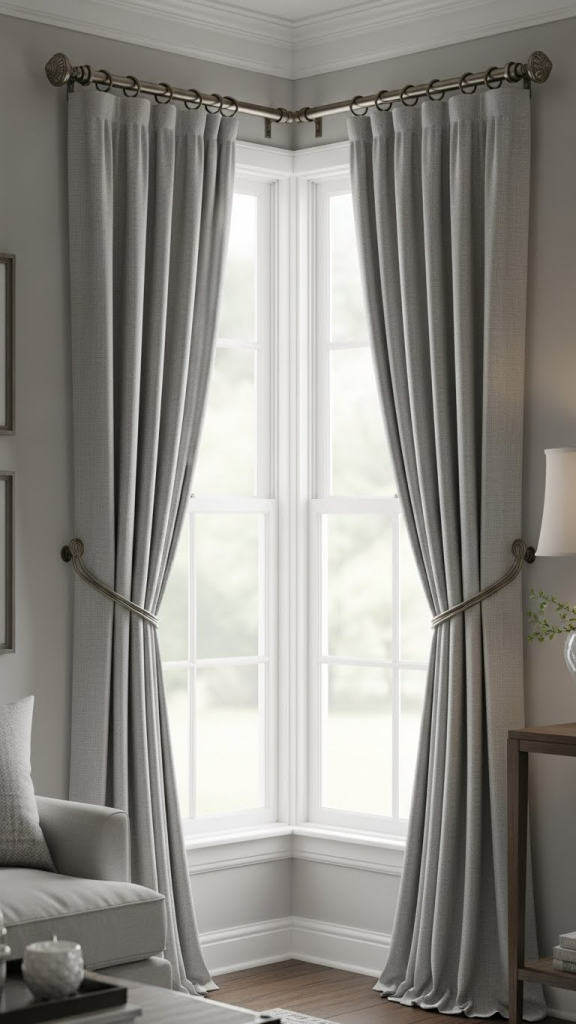
Designing sitting room curtains is one of the easiest ways to change the mood, color, and style of your space. To get a polished look, start by planning your curtain style, measuring correctly, and choosing fabrics that match how much light and privacy you want. A little preparation before you sew, hang, or buy makes every one of your 10 ideas look intentional and “magazine worthy.”
Basic things you’ll need for most curtain projects:
- Measuring tape, pencil, and notepad
- Curtain rod or track, brackets, screws, and wall plugs
- Drill/driver and level
- Fabric (or ready-made panels to customize)
- Curtain rings, clips, grommets, or header tape (depending on style)
- Iron and ironing board
- Sewing machine, thread, pins, and scissors (for DIY sewing)
- Stepladder for safe hanging
- Tiebacks, hooks, or holdbacks (optional)
Basic steps to get your sitting-room curtains right:
- Measure width: measure the window and add at least 1.5–2 times that width for a full, luxurious gather.
- Measure length: decide if curtains end at the sill, below the sill, just skimming the floor, or “puddling” on the floor.
- Choose hardware: pick a rod or track that’s wider than the window so curtains can stack off the glass.
- Select fabric: sheer for airy light, medium-weight for everyday, or lined/heavy for privacy and insulation.
- Decide heading: eyelet, pencil pleat, tab-top, pinch pleat, or wave depending on your style.
- Install hardware, then hang and adjust: steam or iron curtains so they hang smoothly and tweak heights if needed.
Once your basics are sorted, explore these 10 sitting room curtain ideas to transform your space.
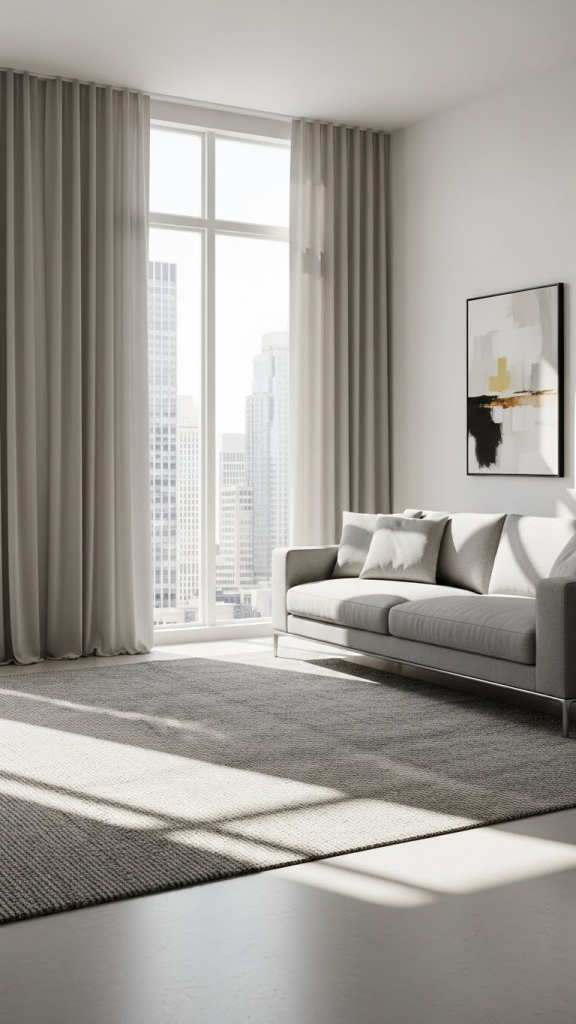
1. Floor-to-Ceiling Hotel Style Curtains
Floor-to-ceiling curtains instantly make a sitting room feel taller and more luxurious. They draw the eye upward, give a “hotel” look, and work beautifully in both small and large spaces. Choose a simple, solid fabric for a calm, high-end vibe.
How to use this idea:
- Mount your curtain rod as close to the ceiling as possible (or just under the cornice) and extend it at least 20–30 cm beyond each side of the window.
- Choose full-length panels that just kiss the floor or puddle slightly for drama.
- Stick to smooth fabrics like linen-look, cotton, or velvet in a color that complements your sofa and rug.
- Use hidden tab or pinch-pleat headings to create neat, consistent folds.
This style suits modern, transitional, and classic interiors and instantly makes even budget fabric look more expensive.
2. Light and Airy Sheer Layers
Sheer curtains are perfect if your sitting room needs privacy during the day but still needs lots of light. Layering sheers with heavier curtains lets you switch between bright and cozy moods.
How to use this idea:
- Install a double curtain rod or track: one for sheers and one for solid or blackout curtains.
- Choose white, cream, or soft pastel sheers that gently filter sunlight.
- During the day, keep the heavier curtains pulled back and let the sheers diffuse the light.
- At night, draw the heavier layer for privacy and warmth.
This idea works especially well for windows facing a garden or balcony, as the light glowing through the sheers adds a soft, inviting ambiance.

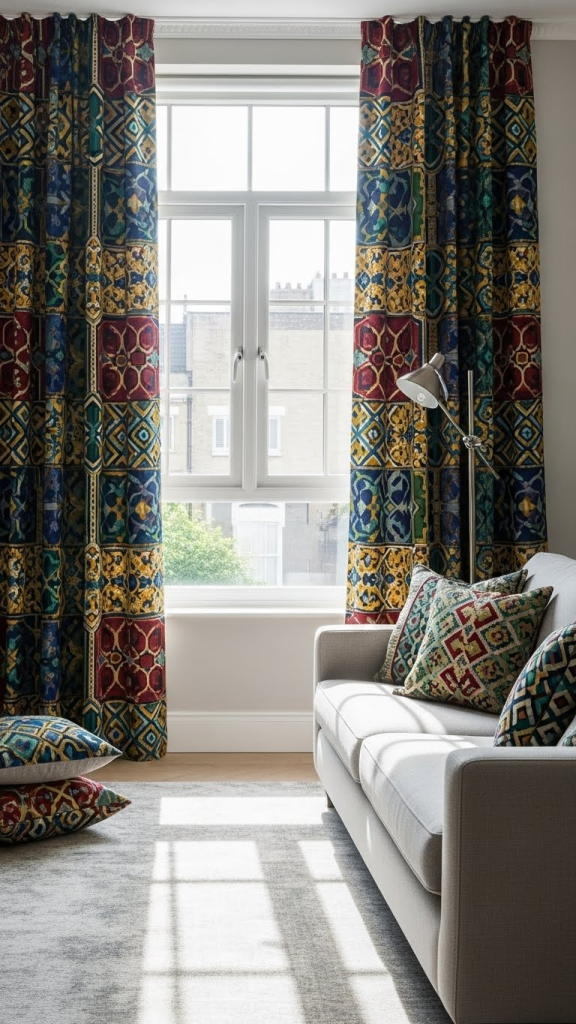
3. Bold Patterned Feature Curtains
If the rest of your sitting room is fairly neutral, patterned curtains can act like a statement wall. Think florals, geometric prints, stripes, or abstract designs that pull together your cushions, rug, and artwork.
How to use this idea:
- Choose one strong pattern and repeat some of its colors in other elements of the room (pillows, throws, art).
- Keep large furniture (sofa, main chairs) fairly solid so the space doesn’t feel too busy.
- For small rooms, pick medium-scale patterns in lighter backgrounds; for large rooms, you can use larger or darker prints.
- Use simple headings like eyelets or pencil pleats so the pattern remains the star.
Patterned curtains are fantastic for adding personality without repainting or buying new furniture.
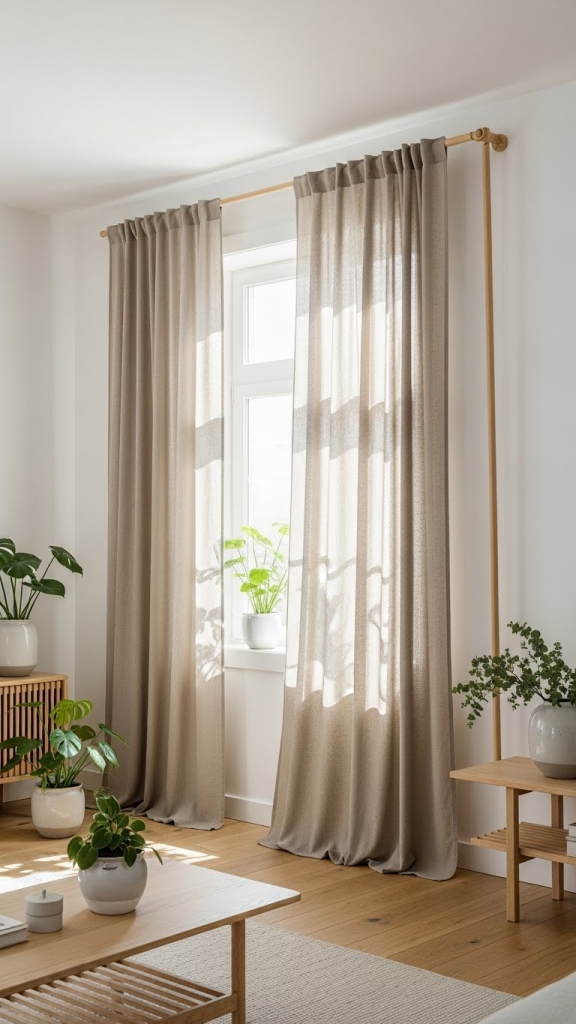
4. Cozy Linen or Cotton Neutrals
Linen and linen-look cotton curtains create a relaxed, airy atmosphere that suits Scandinavian, coastal, and modern farmhouse interiors. Their subtle texture adds interest without shouting for attention.
How to use this idea:
- Choose shades like white, oatmeal, stone, greige, or soft taupe that blend with your walls and flooring.
- Let them hang long and slightly loose, emphasizing their natural drape and texture.
- Pair with simple wooden or black metal rods for a clean, understated look.
- If your room gets strong sun, consider lined linen to avoid too much fading and to improve insulation.
This idea is perfect if you want the sitting room to feel calm, bright, and easy to style for every season.
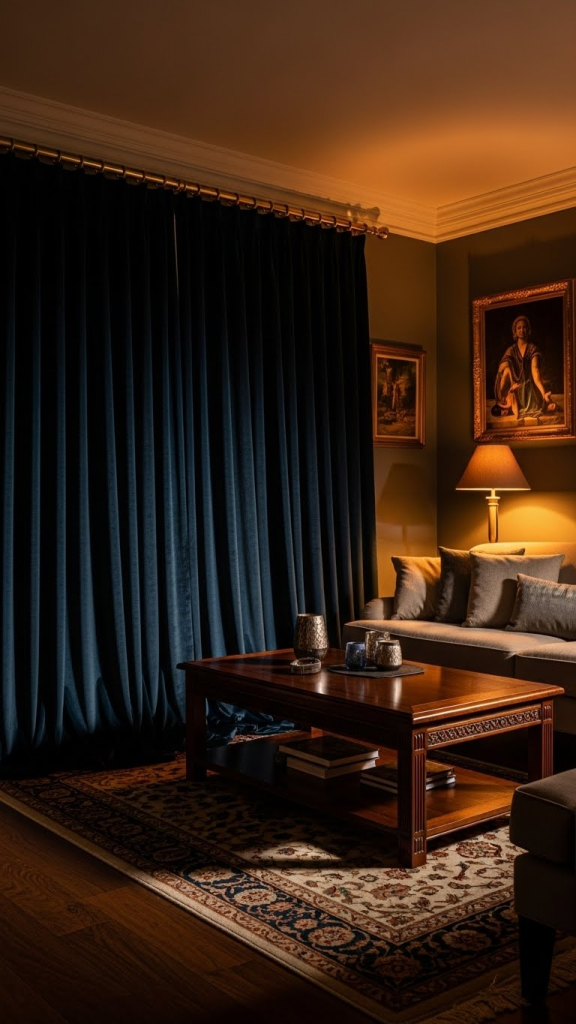
5. Velvet Curtains for Drama and Warmth
Velvet curtains instantly add glamour and cozy richness to a sitting room. They also help block drafts and absorb sound, making the room feel warmer and quieter.
How to use this idea:
- Choose deep, saturated colors like navy, emerald, burgundy, charcoal, or deep teal for a dramatic effect.
- Hang them high and wide to frame the window like a theater stage.
- Pair with metallic curtain rods (brass, gold, or black) and decorative finials for a luxe finish.
- Keep other textiles (cushions, rug) in simpler textures to balance the heaviness of velvet.
Velvet is ideal for formal sitting rooms, TV rooms, or spaces where you want a snug, cocoon-like feeling.
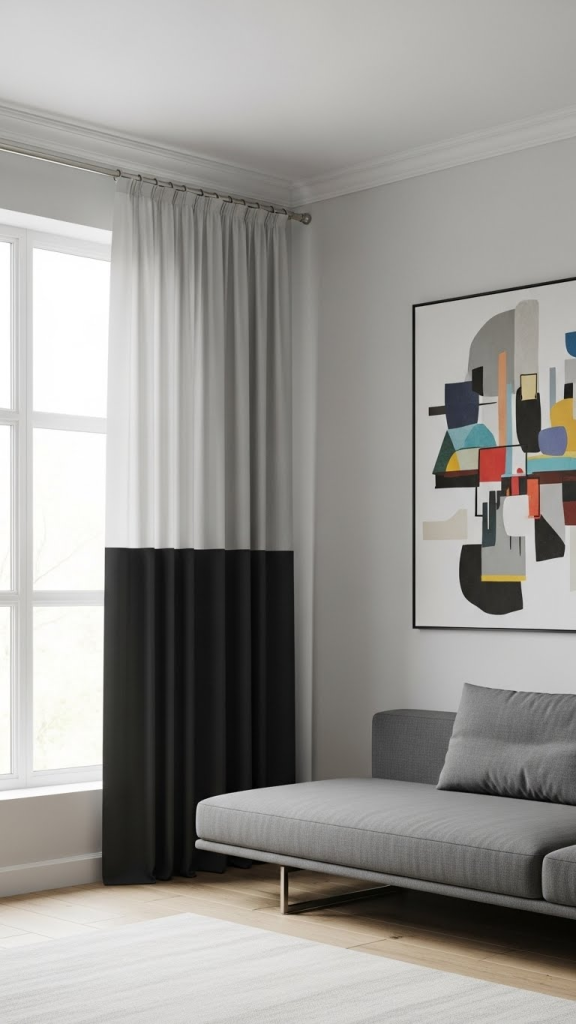
6. Two-Tone Color Block Curtains
Color-block curtains combine two complementary colors in one panel—usually one shade at the top and another at the bottom. This simple design trick can visually lengthen your room or tie different colors together.
How to use this idea:
- Choose a lighter color on top and a darker shade at the bottom to “ground” the room.
- Either sew two fabrics together or buy ready-made color block panels.
- Match one of the panel colors to your wall or sofa, and the other to your accent cushions or rug.
- Keep hardware simple so the focus remains on the bold, graphic lines of the curtain.
This look is great for contemporary sitting rooms and adds interest without busy patterns.
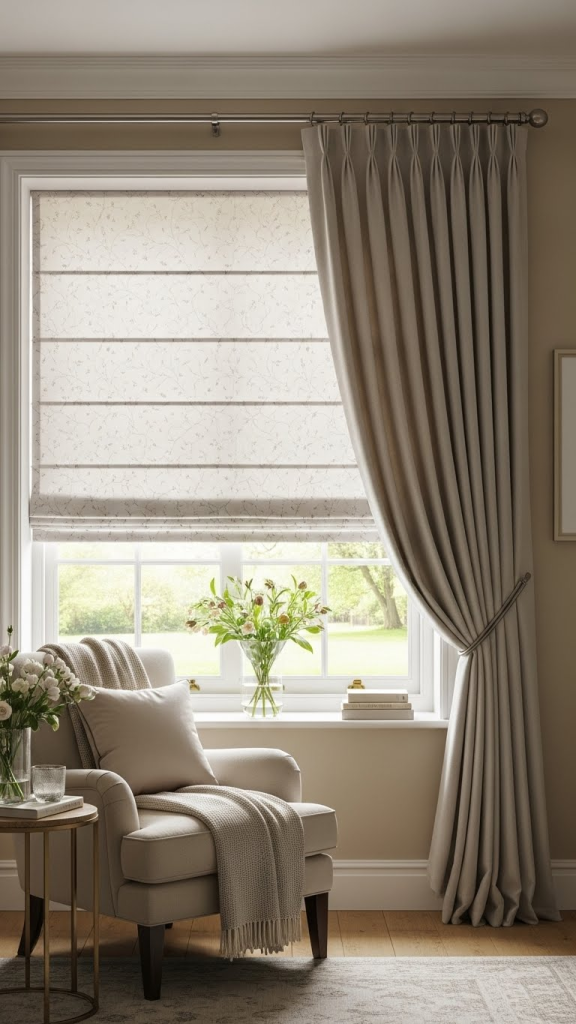
7. Layered Curtains and Roman Blinds
Combining curtains with Roman blinds adds depth and flexibility. The blind handles light control and privacy, while the curtains add softness and style around the window frame.
How to use this idea:
- Fit Roman blinds inside the window recess in a solid or subtle patterned fabric.
- Hang full-length curtains outside the recess, slightly wider and higher than the window.
- Use coordinating fabrics: for example, patterned Romans with plain curtains in a matching color, or vice versa.
- Use the blinds during the day for light control, and draw curtains at night for coziness.
This idea works well if your windows are not especially large and you want them to feel more substantial and dressed.
8. Casual Tab-Top or Tie-Top Curtains
Tab-top and tie-top curtains feel relaxed and informal, perfect for laid-back sitting rooms, beachy spaces, or boho interiors. The visible tabs or ties add a soft, decorative detail along the rod.
How to use this idea:
- Choose lightweight to medium fabrics like cotton, linen, or blends that gather easily.
- Use a simple wooden or metal rod since it will show between the tabs or ties.
- Let the curtains just skim the floor for a neat but casual effect.
- Style with woven baskets, natural fiber rugs, and plants to complete the relaxed look.
They’re also easy to remove, wash, and rehang, which is handy if your sitting room gets a lot of use.
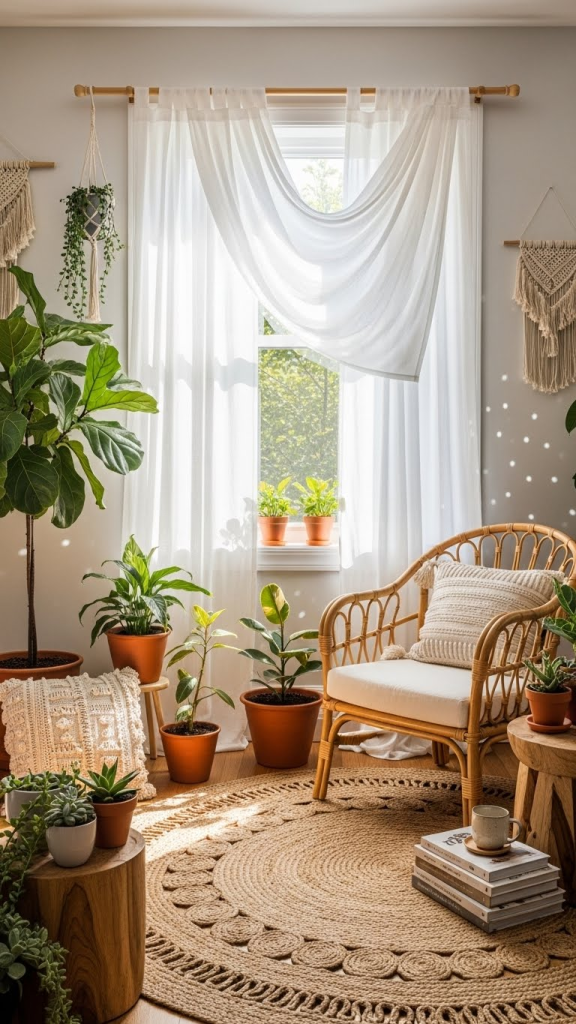
9. Cafe-Style or Half-Height Curtains
For windows where you want privacy but still need light and a clear upper view, cafe-style curtains (covering only the lower half of the window) are a clever solution. They add charm and are especially nice in sitting rooms that open to patios or gardens.
How to use this idea:
- Install a slim tension rod or small rod halfway up the window frame.
- Hang short panels that cover the lower part of the glass, leaving the top open.
- Choose light fabrics with simple patterns (stripes, tiny florals, checks) or plain sheers.
- Combine with a valance or full-length side panels if you want a more finished look.
This idea suits cottage-style, country, and traditional spaces and keeps the room bright while shielding seating areas from street view.
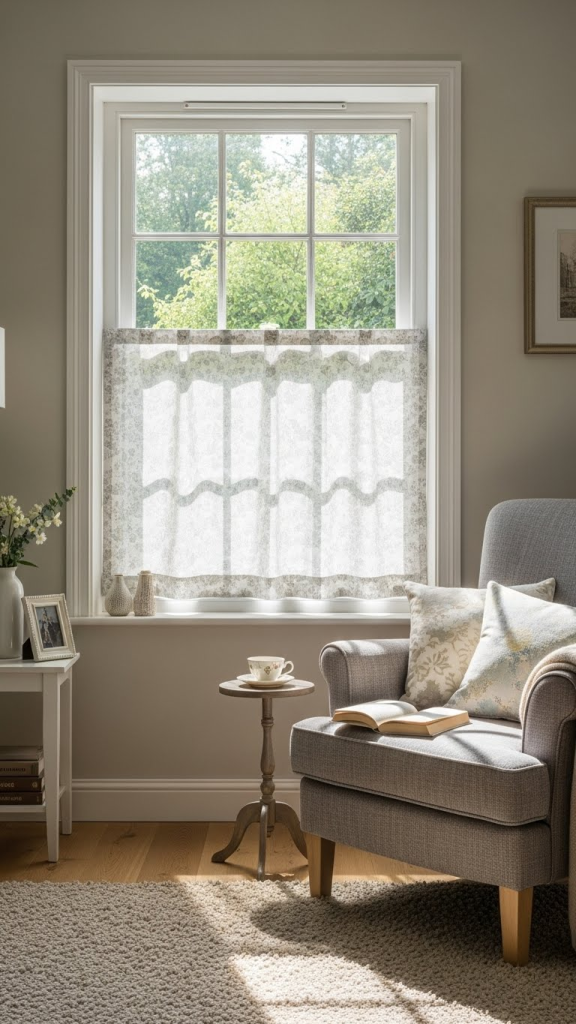
10. Statement Curtain Rods and Decorative Tiebacks
Sometimes, it’s not just the fabric that makes the impact—it’s the details. Coordinating rods, finials, brackets, and tiebacks can turn simple curtains into a polished design feature.
How to use this idea:
- Choose rods in materials that echo other finishes in your room: black metal for modern, brass or gold for glam, wood for rustic or traditional.
- Add decorative finials (ball, leaf, crystal, or sculpted shapes) at each end to frame the window.
- Use fabric tiebacks, rope cords, or metal holdbacks to pull curtains off the window neatly.
- Style the curtains in soft, even folds when open, making sure both sides match in height and fullness.
Well-chosen hardware can make inexpensive curtains look custom and intentional, pulling the entire sitting room together.